Today, an aromatic oil
with a fragrance reminiscent of nutmeg is steam-distilled from the
Melaleuca leaves. Because the Melaleuca alternifolia grows only
in Australia, that country is now the major source of tea tree oil,
exporting some 700 tons of annually. Tea tree products are often referred to
as "melaleuca oil." The pure oil is colorless to pale yellow.
The Miracle of Tea Tree Oil
Latin name: Melaleuca alternifolia
Other names: Australian Tea Tree, Paperbark Tree, Punk Tree, Ti Tree
A Remedy For

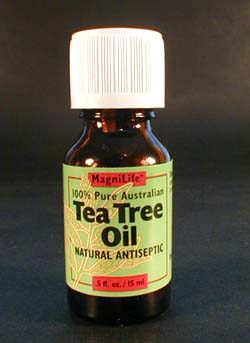 Tea
Tree oil has demonstrated its medicinal value as an antiseptic and
disinfectant. Because of these properties, it is used externally to treat many
skin problems, including athlete's foot, toenail fungus, acne, cold sores,
diaper rash, scabies, insect bites, dandruff, and wounds. When prepared as a
rinse, it may also help relieve sore throat, inflamed gums, and vaginitis.
Tea
Tree oil has demonstrated its medicinal value as an antiseptic and
disinfectant. Because of these properties, it is used externally to treat many
skin problems, including athlete's foot, toenail fungus, acne, cold sores,
diaper rash, scabies, insect bites, dandruff, and wounds. When prepared as a
rinse, it may also help relieve sore throat, inflamed gums, and vaginitis.
Some proponents recommend mixing a few drops of Tea Tree oil with a base oil and massaging it into sore muscles, or into sprains, strains, and arthritic joints. Advocates also say that few drops in a vaporizer inhaled as steam may relieve nasal congestion and sinusitis. Such uses, however, lack any scientific support.
Similarly, aromatherapists recommend inhaling the scent of Tea Tree oil for many of the same bacterial, viral, and fungal disorders treated with external applications of the oil. However, it is unclear how the aroma can have the same effect as direct application to the infection, and no evidence exists to support this technique. In addition, aromatherapists suggest that inhaling the Tea Tree scent can relieve shock and hysteria, bronchitis, coughs, tuberculosis, and whooping cough, and contend that it can be used to boost the immune response against colds, flu, and chickenpox---but again without supporting evidence.
What It Is; Why It Works
Tea Tree is an evergreen that grows in tropical climates, most notably,
Australia and New Zealand, where aborigines chew the leaves or crush them to
make tea. Tea Tree oil, which has a strong distinctive smell, is steam
distilled from the leaves. It is laced with compounds active against candida
(yeast infection), a number of viruses and bacteria such as Staphylococcus
aureus and Escherichia coli, and various fungi. Its
infection-fighting value is enhanced by its ability to penetrate the skin.
Avoid If...
Use with caution if you are prone to allergies. Tea Tree can cause contact
dermatitis (skin irritation). Discontinue use if a rash develops.
Special Cautions
Never take essential oils internally. They are extremely potent and can be
poisonous. Homemade Tea Tree oil preparations used to douche, rinse, or gargle
should always be diluted with water. Do not swallow any form of Tea Tree, and
keep it away from the eyes.
Possible Drug Interactions
No drug interactions have been reported.
Special Information If You Are Pregnant or
Breastfeeding
No harmful effects are known when used externally.
How To Prepare
Tea Tree oil is manufactured as a standardized extract from the leaves of the
plant. It is available in a variety of preparations, including gel, ointment,
cream, and mouthwash forms, and as a pure essential oil.
Typical Dosage
Use only as directed by the package instructions. For instance, in the case of
acne, a preparation of no more than 15 percent Tea Tree oil should be applied
twice a day. For fungal infections, preparations of 70 to 100 percent can be
applied full strength with a clean cotton swab twice daily. For a gargle or
mouth rinse, use only a product identified as a mouthwash. Vaginal douching
should be done under a doctor's supervision with a preparation formulated
especially for this purpose. When using the essential oil for aromatherapy,
measure it in drops. Never take the oil internally.
Overdosage
Some signs of overdose include confusion, loss of consciousness, and coma. If
you suspect an overdose, seek emergency medical attention immediately.
Tea tree oil is great as an insect repellent. Place a few drops into mop water. Also, fleas tend to bite feet, ankles and hands at night. Rub some tea tree oil onto the ankles and wrists before going to sleep if you don't want to get bitten while sleeping.
Tea Tree Oil
It was centuries ago that
Australian aborigines probably first started plucking leaves from a native
tree (Melaleuca alternifolia) to treat skin infections. In 1770,
sailors from Captain Cook's expedition to the South Seas ventured ashore at
New South Wales and brewed a tea using the leaves of the same tree. This
event engendered the herb's English name "tea tree"--which is actually
something of a misnomer because the Melaleuca species bears no
relation to the Camellia species, the usual source of tea leaves.
High-quality tea tree oil
contains 40% or more of terpinen-4-ol, the ingredient that fights harmful
bacteria and fungi and makes the oil so effective in preventing and fighting
infection in cuts, scrapes, insect bites, and stings.
Treat cuts,
scrapes, insect bites and stings, and other minor skin wounds and
irritations. Tea tree oil blends rapidly and easily with the skin's own
oils. In the process, the oil alters the chemical barrier of the skin,
making it less hospitable to the growth of fungi and other organisms. In
these ways, tea tree oil not only lessens the chance of infection, it also
promotes healing and reduces the likelihood of scarring.
Fight fungal nail
infections, jock itch, and athlete's foot. Tea tree oil has been shown
to be effective in countering Trichophyton, the fungus that causes
numerous topical infections, including athlete's foot and jock itch.
Shorten the course
of vaginal yeast infections. Two of the organisms that cause these
discomforts, Candida albicans and Trichomonas vaginalis,
apparently succumb to the actions of tea tree oil.
Gently control
acne. Even severe cases of acne have been shown to benefit from
anti-acne preparations that contain up to 15% tea tree oil, an effect that
can be explained by the oil's antibacterial and skin-healing properties. In
one study conducted in Australia, a comparison was made between a gel
containing 5% tea tree oil and a traditional 5% benzoyl peroxide acne
lotion. The products proved similar in their effectiveness against pimples,
although the herbal preparation worked more slowly. It was notable, however,
that the product containing the tea tree oil caused significantly less
dryness, redness, scaling, and itching to the surrounding skin.
Treat dandruff and
head lice. According to one study, a 5% solution of tea tree oil is
effective against Pityrosporum ovale, a fungus that can cause
dandruff. In a laboratory analysis of tea-tree chemistry, substances were
discovered that can kill head lice. But human research is still needed,
especially since the skin of children (a population particularly susceptible
to lice) may be overly sensitive to tea tree oil.
Curtail warts.
Tea tree oil is sometimes recommended for warts, which are caused by
viruses. More research is needed to determine whether the oil is truly
effective for this purpose, but it certainly does not seem to cause any
complications.
Specifically, tea tree oil may help to:
Note: Tea tree oil has also been found to be useful for a number of other disorders. For information on these additional ailments, see our Dosage Recommendations Chart for Tea Tree Oil.
Forms:
- suppository
- oil
- gel
- cream
Special tip:
For minor skin
wounds, insect bites and stings, and irritations: Cleanse the wound and
apply one or two drops of tea tree oil to the affected area two or three
times daily.
For nail
infections: Rub tea tree oil on the nail twice a day.
For athlete's
foot: Apply tea tree oil or cream to affected areas twice a day and/or
use it in a foot bath. For a foot bath: Put 20 drops of tea tree oil in a
small basin of warm water and soak the feet for 15 minutes, two or three
times a day. Dry the feet thoroughly after soaking and apply a drop or two
of oil to the affected area
For vaginal yeast
infections: Use a tea tree oil vaginal suppository, available at
health-food outlets, every 12 hours for up to five days.
For acne:
Apply a drop or two to each acne lesion three times a day.
For warts: Put
a few drops of the oil on a small gauze compress and tape it over the wart
at bedtime. Remove it in the morning. Repeat until the wart heals.
--Look for tea tree oil derived only from the Melaleuca alternifolia tree. Oil from other species can have a high percentage of cineole, a compound that can irritate the skin and hinder the oil's active ingredients from providing any therapeutic benefit.
Be sure to check out
our Dosage Recommendations Chart for Tea Tree Oil, which lists
therapeutic dosages for specific ailments at a glance.
Some toothpastes contain tea tree oil. However, because the oil is dangerous if swallowed, only very small amounts are included. This makes the products safe, but essentially nullifies any bacteria-fighting benefits they claim to have.
There are no known drug
or nutrient interactions associated with tea tree oil.
|
Ailments
|
Dosage
|
| Acne |
Apply a drop or two to each acne
lesion 3 times a day. |
| Athlete's Foot |
Apply oil or cream to affected
areas twice a day and/or use as a footbath. |
| Cuts and Scrapes |
Apply cream to wound 3 times a day
in place of aloe or lavender oil. |
| Insect Bites and Stings |
Apply 1 drop of oil to skin several
times a day, or as needed. |
| Warts |
Put several drops on a compress.
Use overnight until the wart heals. |
END
Tea Tree Oil: "Medicine Chest in a Bottle"
Cures all... costs little
Ranging in price from about $7-11 CAD for 10-15 ml, a single bottle can replace many of the medications, treatments and health products in your medicine cabinet.
The best tea tree oil is organic, and found in indigo blue glass bottles. Never buy tea tree oil (or any essential oil) in clear bottles, or in plastic bottles. Clear bottles allow sunlight to penetrate the oil, which can damage its delicate properties. Plastic can be dissolved by the oil, which in turn can contaminate the oil. Always store it in a cool, dry place, away from sunlight.
Tea tree oil's most outstanding quality is its potency as an anti-fungal. It is used to cure fungal infections such as athlete's foot, ringworm, dandruff, yeast infections, candida and thrush. But it is also highly effective as an anti-bacterial, anti-viral and anti-septic. It is deep-penetrating, and is 4-10 times more soothing than aloe.
Common uses for tea tree oil
Below is a small sample of the many uses for tea tree oil. A word of caution-tea tree oil is very pungent and potent. It should only be used externally, and sparingly. It should not be used on babies or small children. Keep it away from eyes and wash you hands after using it. If you, your child or pet find it too strong, try diluting it with water until you find a comfortable potency.
- Cold sores - Apply pure oil directly to the sore as many times as needed.
- Acne - Apply pure oil to the blemish.
- Nasal ulcers - Drip 1-3 drops of oil onto a cotton swab and apply it directly to the sore. Some people find pure tea tree oil to be too strong to use inside the nose, or on any mucous membrane. If this is the case, just dilute it by adding about 3 drops to 3-5 mL of water. Adjust the ratio until it's comfortable for you.
- Dental abscess/toothache - Drip a few drops directly into the cavity. Or drip a couple drops on your finger and rub the tooth and surrounding gum. Repeat several times a day, or however often as necessary. This is just for temporary relief, so make sure to get to your dentist as soon as possible. Be careful not to swallow the oil. Injesting a little bit of the oil won't hurt you, but always try to spit it out. The taste is also very strong, medicinal and can be unpleasant.
- Sore throat/throat infection - Gargle with 8-10 drops of tea tree oil diluted in half an ounce of water. Repeat this two or three times within twenty minutes.
- Cuts/scrapes/scratches/abrasions - Rub a few drops of pure oil into the cut. Do not use tea tree oil on deep cuts and wounds, body piercings and tattoos.
- Ear infection - Drip about three drops of
tea tree oil into 5 mL of water. Fill a dropper with the solution and
gently fill the ear with it. Hold it in the ear for half a minute and
drain. Repeat several times a day or however often is necessary. Do not
put pure tea tree oil into the ear. Also, rub pure oil onto the outer
surface of the ear.
- Boils - Apply two drops to the boil daily for 1-2 months, or as long as necessary. Be sure to do it everyday in order to completely take care of the infection.
- Ringworm - Apply pure oil daily for at least one month straight. Make sure to do it everyday or the fungus can build up a resistance to the oil.
- Insect bites - Apply one or two drops directly to the bite.
- Athlete's foot - Apply pure oil directly to the feet, on a daily basis for at least a month to make sure the fungus is destroyed. In addition, you can drip several drops into a basin of water and soak the feet.
- Canker sores - Apply pure oil directly to the sore.
- Oral hygiene - Add one drop of oil to your toothbrush when brushing your teeth, or put one drop into the crease of your finger, run dental floss through it and floss.
- Dandruff - Add two or three drops to your shampoo.
- Ear mites - Make a mild solution of tea tree oil and water, perhaps five drops of oil to 15 ml of water. Using a dropper, gently drip about ten drops into your pet's ear. Also, dip a cotton ball in the solution and clean the inside of the ear.
- Fleas - Make a strong solution of tea tree oil and water. Using a spray bottle, spritz your pet's coat and rub the solution into their fur. Also, spray the liquid on carpets, floors and other areas where fleas lay their eggs.